





Klaipėda. Formerly known as Memel. In ancient times, this area was inhabited by the Curonian tribes. In 1252, the Livonian Order built a castle here and the area became a town. Until 1923, when the Klaipėda region became part of Lithuania, the land belonged to the Teutonic Order, the Duchy of Prussia, the Kingdom of Prussia, and lastly – Germany. Many prominent figures who left their mark on today’s global culture – literature, music, philosophy – walked the streets of this city. Among them were the relatives of philosopher Immanuel Kant… After complex historical challenges, the city is now writing a chapter in modern times. The foundation of Klaipėda’s “book” is its heritage, reflected in its architecture, chronicles, and the memories of the city’s ancestors. It is also reflected in indescribable words and philosophical thoughts that arise from the depths of these mysterious lands, the calm of the Curonian Lagoon and the turbulence of the Baltic Sea… and this was and this is the environment in which the library of Immanuel Kant name thrives…
With this article we’d like to introduce readers with philosophical path of Immanuel Kant Library in Klaipėda, Lithuania.
The library lays the foundations of philosophical thought
On October 4, 1920, the Klaipėda City Library opened its doors. Until 1925, the leader was Georg Kemp, a PhD: organizer of cultural events, a member of the Goethe Society, and a member of the Klaipėda Regional Museum Society. The library hosted book presentations, meetings with authors, readings, book exhibitions, and morning performances with actors. The lectures were also given by the director himself. From 1923, a modern device was used to illustrate lectures at that time – the slide display apparatus (Lichtbildapparates). Let’s jump a few decades ahead – the end of Soviet Lithuania…
When the Art Department started its activities in 1988, the long-time director of the Library Bronislava Lauciuvienė said at the opening: “We are opening the Art Library at a time when the public’s hunger for spiritual things, art, and philosophy has greatly increased. This period is the beginning of a path in which our people revalue values and begin to calculate the damage caused by centralized management to the nature of Lithuania and the soul of Lithuanians.” The activities of the Historians’ Club began in the Art Department, which attracted prominent people of Lithuanian science of humanities.
In 2018, a group of intellectuals approached the Klaipėda City Municipal Public Library with an initiative to name the library after the famous philosopher Immanuel Kant. The initiators who collected historical material to support their idea emphasized that in the XVII century three generations of I. Kant’s family lived in Memel – great-grandparents, grandparents, parents and uncles. They were baptized and married in the St. John’s Church and buried in this region. By the decision of the Klaipėda City Municipality Council, a new name of the library was approved – Klaipėda City Municipality Immanuel Kant Public Library.
The name given, as well as the gift received, carries responsibility. The mission is clear – to spread the name of Kant and his philosophical thoughts in Lithuania and abroad; of course, to spread the awareness of Klaipėda as a unique region. In this way, step by step, the I. Kant Library follows the path of the centre of philosophical thought.
We would like to introduce you to the activities of the library, by which we develop philosophical thought from various angles and will develop it in the future.
How digitalization connects the past with the present
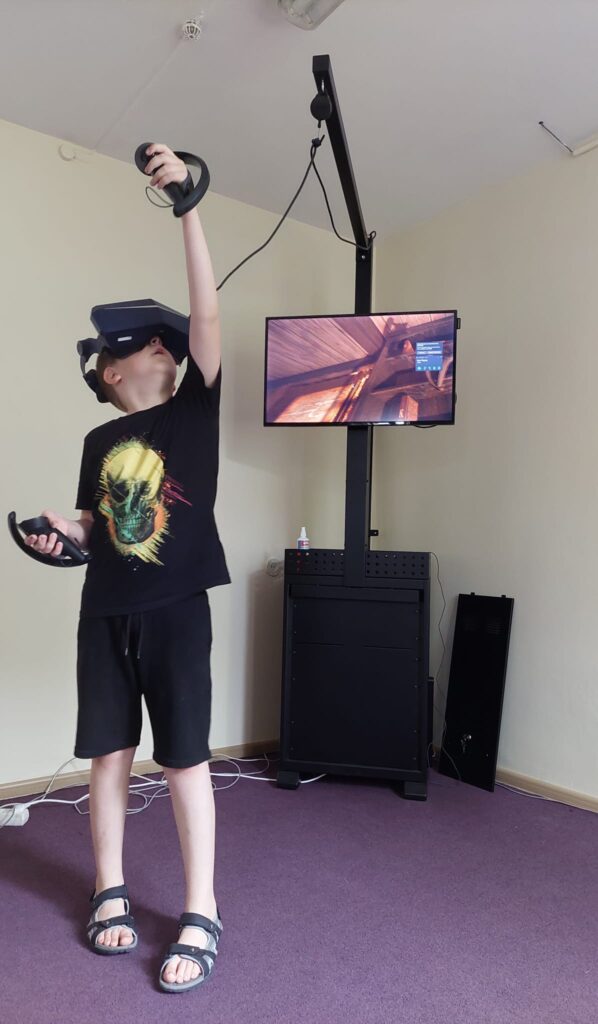
Back in 1997, the library began the path of digitization. And the projects carried out in recent years are entering the virtual space: “VR’Kantu: The History of Klaipėda from Another Angle” (2024-2026), which has been funded by the international fund NextGenerationEU. According to the project manager, Head of the IT and Projects Department Jolita Baltrimienė, the project aims to digitize and supplement the Immanuel Kant tour of Klaipėda created and developed by the library over several years, emphasizing not only I. Kant’s relations with the city, but also Klaipėda’s historical and architectural past, traveling virtually around Klaipėda with I. Kant.
The VR platform will be designed to promote learning and education, as well as tourism, providing an opportunity for both local residents and foreign visitors to get to know the history and cultural heritage of Klaipėda city.
The project is realized in collaboration with historians, cultural heritage specialists and education experts, ensuring the accuracy and educational value of the content. The social responsibility of the project will be implemented by ensuring that the project is accessible and adapted to different user groups, including people with disabilities.
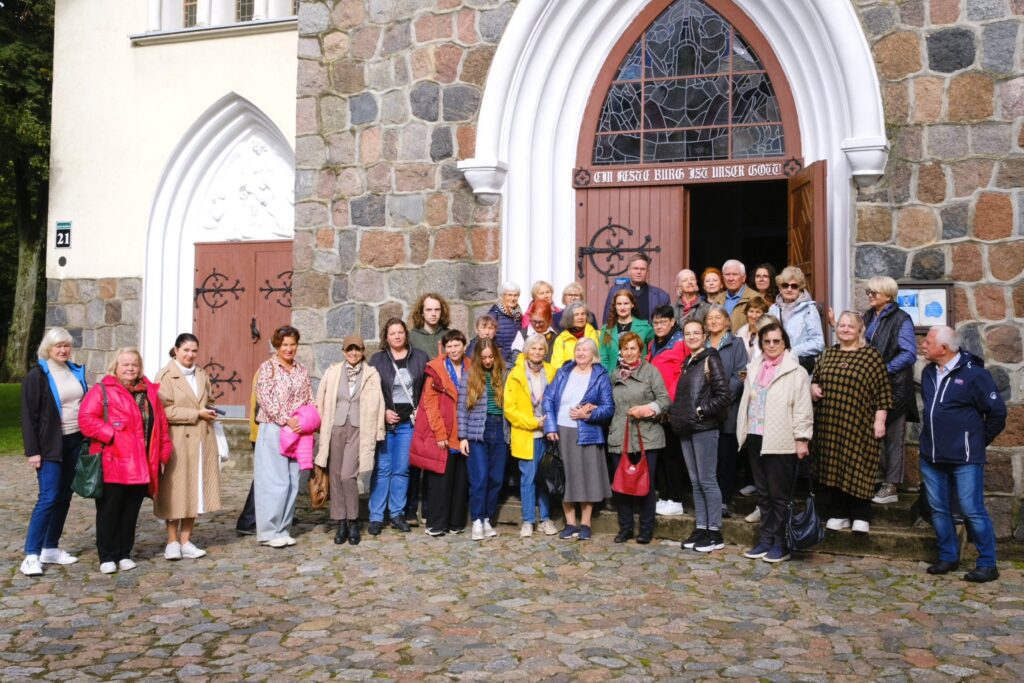
Returning to the physical world, the connection between the past and the present is within project “Klaipėda – the City of Immanuel Kant’s Father: Connections between the Past and the Present” (2025), funded by the Department of Cultural Heritage under the Ministry of Culture. Its aim is to develop and actualize the revival, knowledge and dissemination of information of the immovable cultural heritage of Klaipėda Region, which is related to the relatives between I. Kant’s ancestors and scholars, East Prussian culture, cultural heritage objects of Klaipėda Region and significant cultural reforms. In the region, nationally and abroad, to contribute to the preservation of the immovable cultural heritage of Lithuania, and to introduce the history and culture of the region through it. During the execution of the project, an audio guide of the tourist route was created in Lithuanian, English and German languages. This gives everyone the opportunity to travel independently following the paths of Immanuel Kant’s ancestors. You can try the opportunity to move through the region of Lithuania Minor here:
Audio guide of the tour “The Path of Knowledge of Immanuel Kant” on our website: https://tinyurl.com/b1bl1oudio;
You can also listen to the audio guide of the tour on Spotify: https://tinyurl.com/sp0t1dio
Also on the Sound Cloud platform: https://tinyurl.com/s0undio .
How do we involve citizens in philosophical thought?
It was 2019, when International Scientific Conference was first organised. Event where famous Lithuanian and foreign philosophers and scientists would present their presentations. For example, in 2024, Dr. Tim Kunze from the University of Freiburg shared his philosophical insights. You can watch his presentation here:
In 2025 festival, presentations were given by Assoc. Prof. Dr. Tricia Van of LCC International University and Shawn Christopher Vigil, a doctoral student at Charles University in Prague.
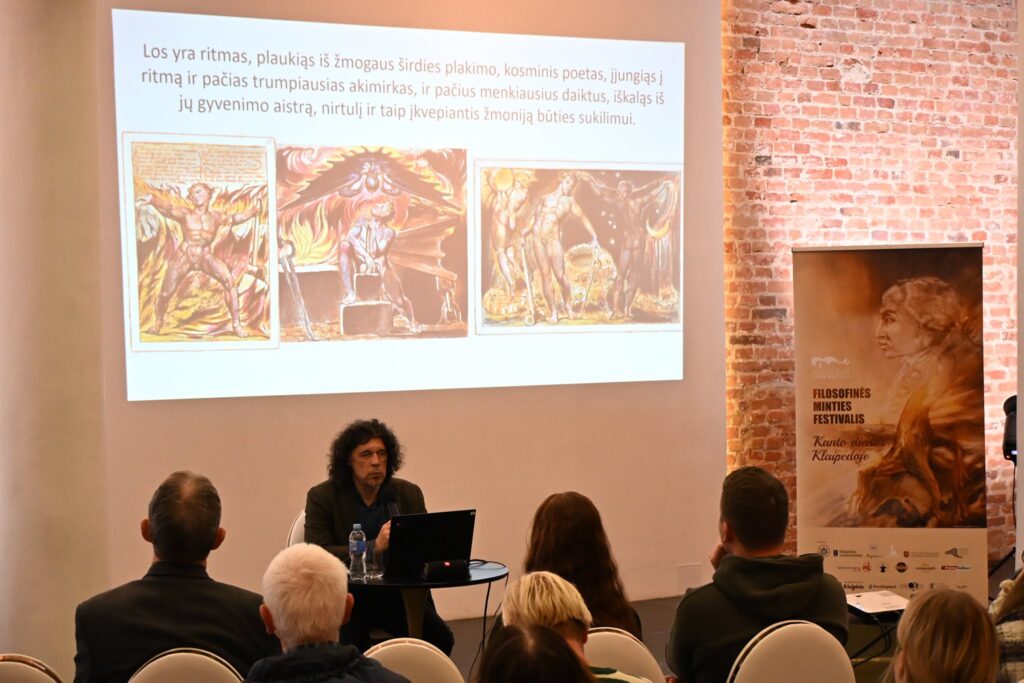
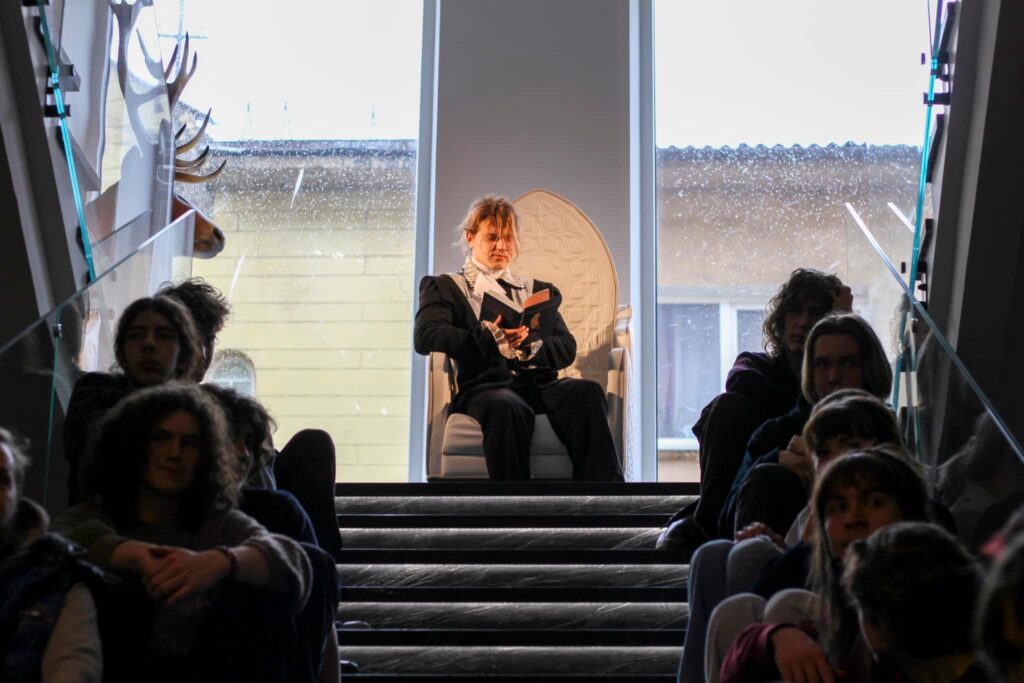
The new leader of the I. Kant Library, Renata Rudienė, proposed the idea of how to spread the name of I. Kant in the society, so that the city would breathe and live in philosophical, Kantian moods for a while. That idea is the international festival “Kant Days in Klaipėda”, which was launched in 2024. The event is intended for the general public and all those interested in philosophy. It is a week where philosophy, art, history, music and creativity meet. From lectures, discussions, musical afternoons to slam workshops, performance and water colour master classes.
On 2024 April 22, to honour the 300th anniversary of the philosopher Immanuel Kant, Dr. Jūratė Sučylaitė’s historical novel “The Way of Immanuel” was presented. The author draws on historical facts, but the novel also contains artistic invention, fantasies.
The head of the central department, Loreta Liutkutė, had a question about how to promote the involvement and interest of young people (14-29 years old) in philosophy, reading and culture, and how to promote critical thinking. This is how the project “Kanto Rap” (2025) was born, a creative experiment with young people who think differently, who ask questions, are looking for answers and opportunities for self-expression. The ambassadors of this project were members of the Klaipėda alternative music band “Imanuelis Kantas”. The project was funded by the Lithuanian Council for Culture, during which 5 cycles of events have been implemented:
Music Jam Projects: meetings of young people playing various musical instruments, competitions, writing author’s music, concerts.
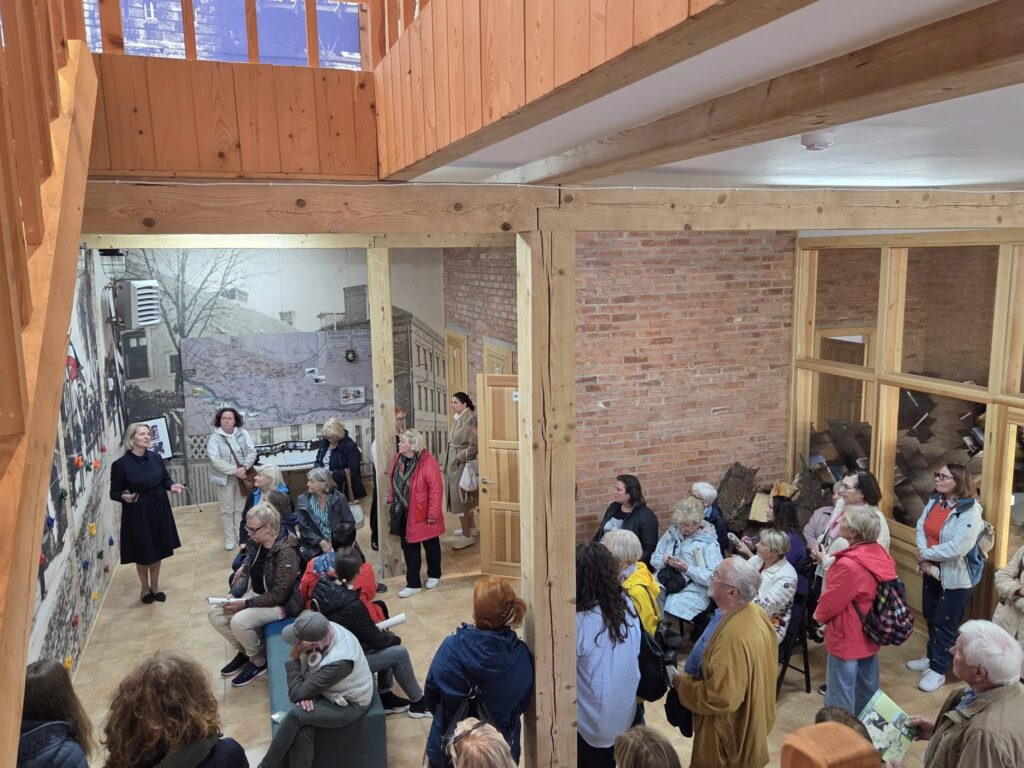
Street Philosophy: discussions and debates together with the community of Klaipėda University. A Different City: Interactive lectures-excursions designed to get to know the history and cultural heritage of the city.
Genealogy Curiosities: lectures on ancestral history aimed at opening up the intellectual potential of young people, taking an interest in the curiosities of history, family history, and the fates of generations that have survived different eras.
Theatre Improvisations: from theatrical slam poetry evenings to the opportunity to become participants in a professional performance. Theatre is one of the types of art that liberates a young person and helps to reveal their creative potential.
The centre of philosophical thought is the near future.
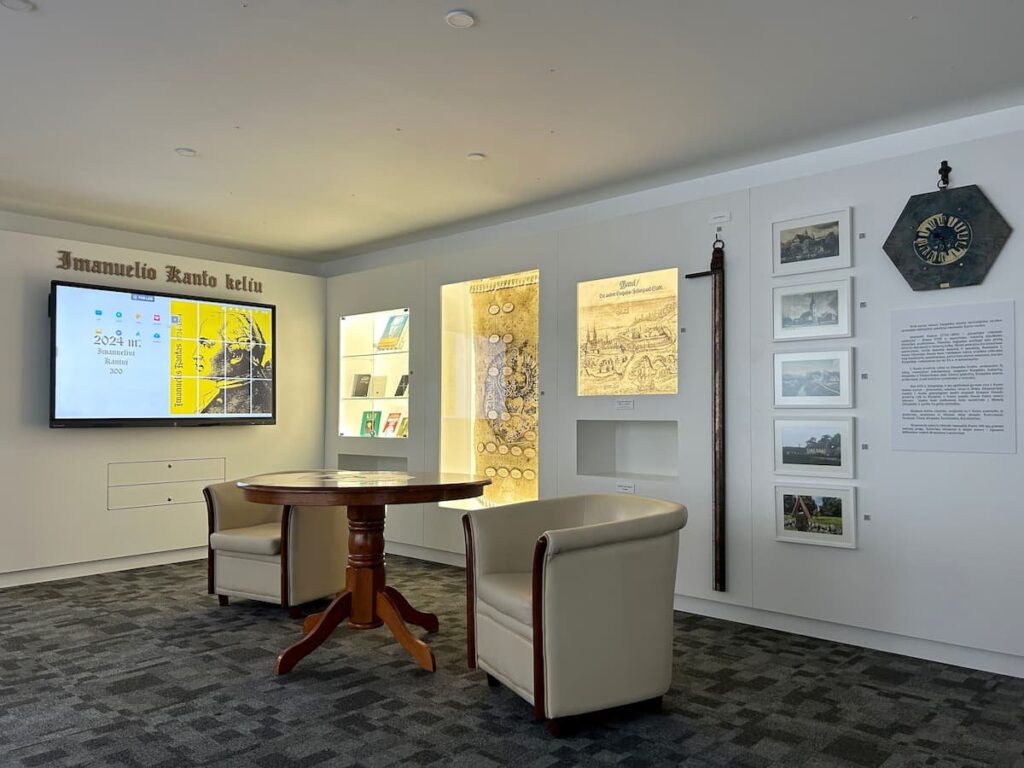
A good example for a good start: in 2024, to commemorate the 300th anniversary of the philosopher’s birth, the exposition “On the Way of Immanuel Kant” was opened. It is a space that talks about the life and creative path of Kant. The Kant room displays the attributes that influenced Kant’s life: a clock, a photo gallery, I. Kant genealogy tree, I. Kant book library, etc.; The information is supplemented by QR codes assigned to the attributes of the exposition, allowing you to get familiar with them in Lithuanian and English languages. For those who want to visit the exposition virtually, click on this link: https://tinyurl.com/KPDexp0
This space is a great visual introduction to the Centre of Philosophical Thought. The Centre is intended for all those who want to delve into philosophy, raise concerns about ontological issues, the search for meaning, ethics and moral aspirations. A community will be gathered here, who will have the opportunity to participate in activities, workshops, readings, and film screenings. We collect the most relevant and up-to-date philosophical library from various countries of the world.
We invite you to join with various ideas: to develop the international community of Philosophical Thought, to promote philosophical ideas, to share the experiences of different cultures. Of course, we invite you to visit us!


Leave a Reply